The Importance of Hydration
Water is essential for every function in your body. Learn how to stay properly hydrated
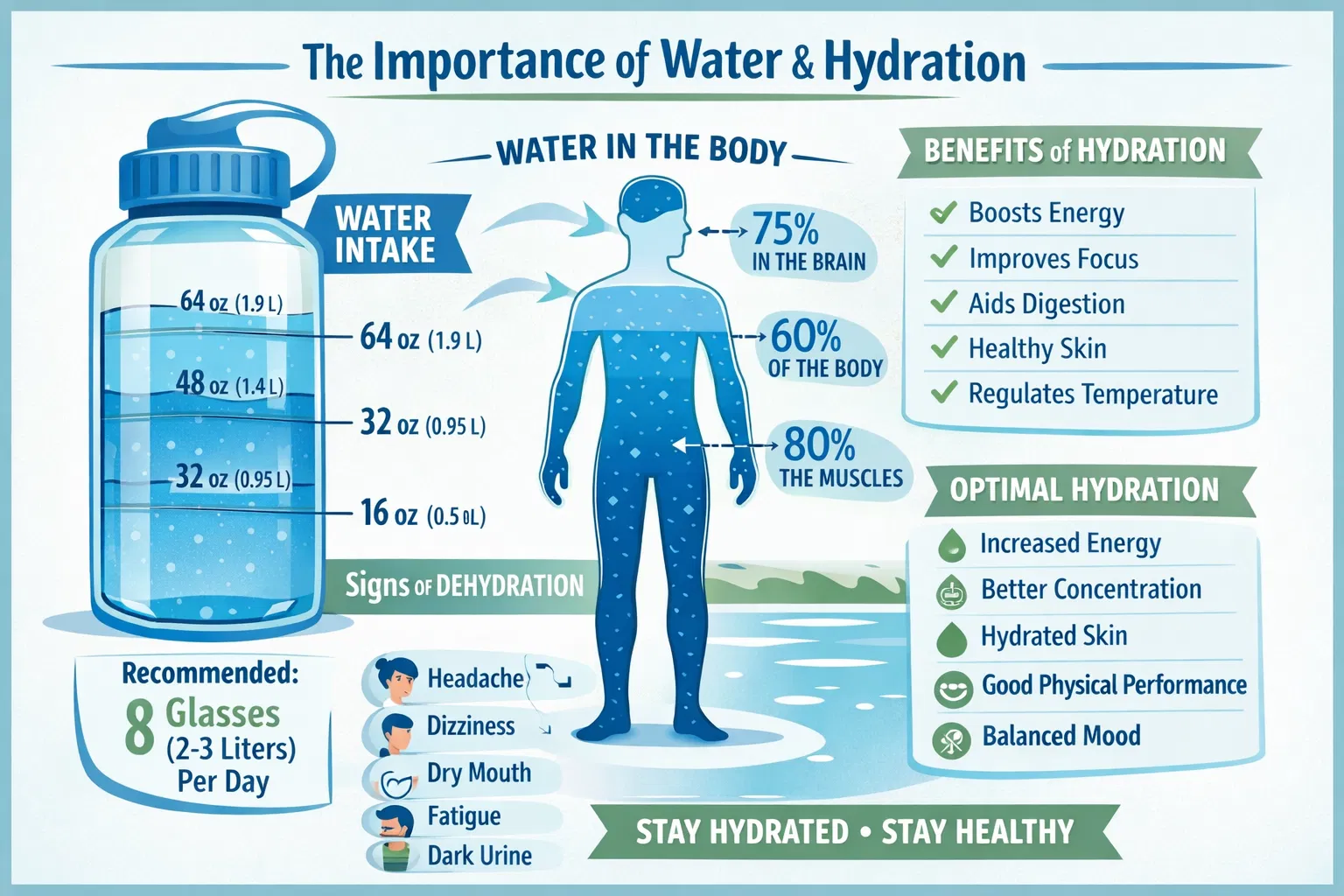
Water in the Human Body
Understanding your body's water composition
Body Water Distribution
Brain75%
Muscles80%
Bones31%
Overall Body60%
Why Water Matters
- •Transports nutrients and oxygen to cells
- •Regulates body temperature through perspiration
- •Cushions joints and protects organs
- •Aids digestion and nutrient absorption
- •Removes waste and toxins through urination
Daily Water Intake Recommendations
How much water should you drink?
8 Glasses
or 64 ounces (1.9 liters)
The common "8x8" rule for daily water intake
General Guidelines
- •Drink when thirsty
- •Monitor urine color (pale yellow = well hydrated)
- •Adjust for activity level and climate
Individual Needs Vary
- •Athletes need more water
- •Hot climates increase water needs
- •Pregnancy and breastfeeding increase needs
Note: About 20% of your daily water intake typically comes from food, especially fruits and vegetables. The remaining 80% should come from beverages, primarily water.
Signs of Dehydration
Recognize when your body needs more water
Early Signs
- •Thirst
- •Dry mouth and lips
- •Dark yellow urine
- •Fatigue and weakness
Severe Signs
- •Dizziness and lightheadedness
- •Headaches
- •Rapid heartbeat
- •Confusion or difficulty concentrating
⚠️ Important: If you experience severe dehydration symptoms, seek medical attention immediately. Severe dehydration can be life-threatening.
Benefits of Proper Hydration
What happens when you drink enough water
Increased Energy
Even mild dehydration can cause fatigue
Improved Focus
Better concentration and mental clarity
Healthy Skin
Hydrated skin appears more youthful
Better Digestion
Water aids nutrient absorption
Weight Management
Water helps control appetite
Joint Health
Cushions joints and reduces pain
Detoxification
Flushes out waste and toxins
Better Performance
Improves physical and mental performance
Practical Hydration Tips
1.Start Your Day with Water: Drink a glass of water first thing in the morning
2.Carry a Water Bottle: Keep water with you throughout the day
3.Drink Before Meals: Have water 30 minutes before eating
4.Monitor Urine Color: Pale yellow indicates good hydration
5.Increase During Exercise: Drink more water when physically active
6.Eat Water-Rich Foods: Include fruits and vegetables with high water content
7.Limit Dehydrating Beverages: Reduce caffeine and alcohol intake
8.Set Reminders: Use phone alarms or apps to remind you to drink water
Ad