Understanding Macronutrients
Learn about proteins, carbohydrates, and fats—the three essential macronutrients that fuel your body
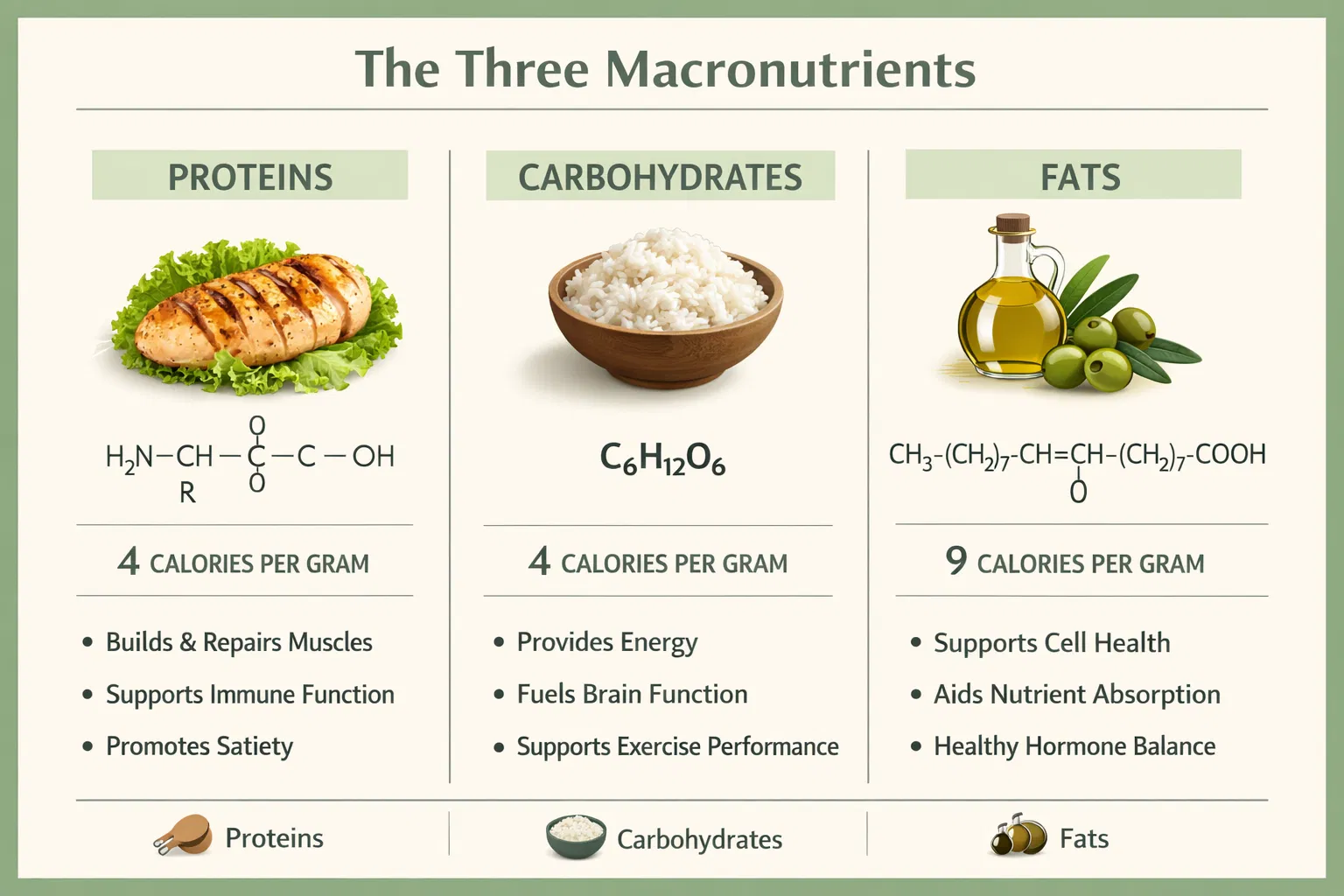
Proteins
Building blocks for muscles and tissues
Key Facts
- •Calories: 4 calories per gram
- •Daily Intake: 0.8-1.0g per kg of body weight
- •Essential: Contains 9 essential amino acids
Primary Functions
- ✓Builds and repairs muscles and tissues
- ✓Supports immune function and antibody production
- ✓Produces hormones and enzymes
Best Protein Sources
Chicken Breast
Fish
Eggs
Greek Yogurt
Legumes
Nuts & Seeds
Carbohydrates
Primary energy source for the body
Key Facts
- •Calories: 4 calories per gram
- •Daily Intake: 225-325g (45-65% of calories)
- •Types: Simple, Complex, and Fiber
Primary Functions
- ✓Provides quick energy for daily activities
- ✓Fuels brain function and mental performance
- ✓Supports exercise performance and recovery
Best Carbohydrate Sources
Whole Grains
Oats
Brown Rice
Sweet Potatoes
Fruits
Vegetables
Fats
Essential for cell health and nutrient absorption
Key Facts
- •Calories: 9 calories per gram
- •Daily Intake: 50-78g (20-35% of calories)
- •Types: Saturated, Unsaturated, Trans
Primary Functions
- ✓Supports cell membrane structure
- ✓Aids absorption of fat-soluble vitamins
- ✓Supports brain health and cognitive function
Best Fat Sources
Olive Oil
Avocado
Nuts
Seeds
Fatty Fish
Coconut Oil
Optimal Macronutrient Balance
Recommended daily macronutrient distribution for most adults
Carbohydrates45-65%
Proteins10-35%
Fats20-35%
These percentages are general guidelines. Individual needs vary based on age, activity level, health goals, and personal circumstances.
Ad