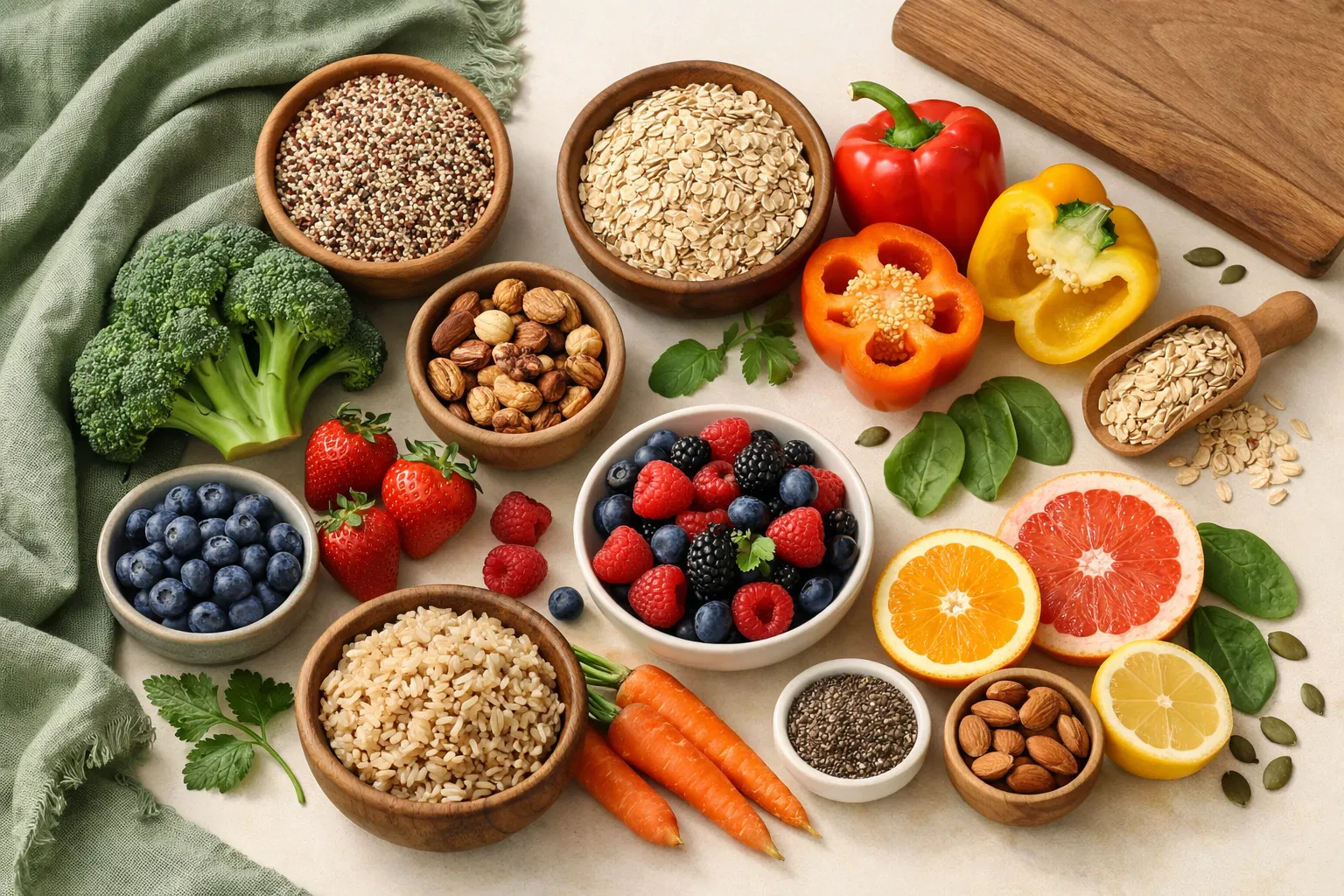
Decades of research consistently rank the Mediterranean diet as one of the healthiest eating patterns on earth. Discover the science behind its remarkable benefits for heart health, brain function, longevity, and weight management — and learn exactly how to adopt it.
What Is the Mediterranean Diet?
The Mediterranean diet is not a rigid meal plan with strict rules — it is a flexible, culturally rich eating pattern inspired by the traditional foods of countries bordering the Mediterranean Sea, including Greece, Italy, Spain, and southern France. It was first formally studied in the 1960s by American physiologist Ancel Keys, whose landmark Seven Countries Study revealed that populations in this region had dramatically lower rates of cardiovascular disease than their Northern European and American counterparts, despite consuming significant amounts of dietary fat.
What distinguished these populations was not the quantity of fat they consumed, but its quality. Olive oil — rich in monounsaturated fatty acids and polyphenols — replaced butter and lard. Fish appeared on the table several times a week. Vegetables, legumes, whole grains, nuts, and fresh fruit formed the foundation of every meal. Red meat was a rare occasion, not a daily staple. And meals were eaten slowly, communally, and with moderate amounts of red wine.
Today, the Mediterranean diet is consistently ranked the number-one overall diet by U.S. News & World Report, and the body of evidence supporting its health benefits spans thousands of peer-reviewed studies across multiple decades and continents.
The Core Foods: What to Eat and Why
Understanding the Mediterranean diet begins with understanding its food hierarchy. Rather than counting calories or macronutrients, this eating pattern emphasizes food quality and variety.
Extra-Virgin Olive Oil is the cornerstone fat of the Mediterranean diet. It is rich in oleocanthal, a natural anti-inflammatory compound with effects similar to ibuprofen, and in oleic acid, a monounsaturated fat that supports cardiovascular health. Research published in the journal Circulation found that higher olive oil consumption was associated with a 14% lower risk of cardiovascular disease and a 19% lower risk of cardiovascular mortality.
Vegetables and Legumes form the bulk of every meal. Tomatoes, eggplant, zucchini, peppers, spinach, chickpeas, lentils, and fava beans provide fiber, antioxidants, and plant-based protein. The fiber content alone — typically 25–40 grams per day on a Mediterranean diet — feeds beneficial gut bacteria, reduces LDL cholesterol, and stabilizes blood sugar levels.
Fatty Fish such as salmon, sardines, mackerel, and anchovies are consumed at least twice a week. These are among the richest dietary sources of omega-3 fatty acids (EPA and DHA), which reduce triglycerides, lower blood pressure, decrease platelet aggregation, and have well-documented anti-inflammatory and neuroprotective effects.
Whole Grains including farro, barley, bulgur, and whole-grain bread provide slow-digesting carbohydrates that sustain energy without causing the blood sugar spikes associated with refined grains. Their high fiber and B-vitamin content supports digestive health and metabolic function.
Nuts and Seeds — particularly walnuts, almonds, and pistachios — are eaten daily as snacks or incorporated into dishes. They provide healthy fats, plant sterols, magnesium, and vitamin E, all of which contribute to cardiovascular protection.
Fresh Fruit serves as the primary dessert. Figs, pomegranates, citrus fruits, and berries deliver natural sugars alongside fiber, vitamins, and powerful antioxidants like anthocyanins and flavonoids.
The Science: What the Research Actually Shows
Few dietary patterns have been studied as extensively as the Mediterranean diet. The evidence base is remarkable in both its breadth and consistency.
Cardiovascular Disease. The PREDIMED trial — a landmark randomized controlled trial involving 7,447 participants at high cardiovascular risk — found that those assigned to a Mediterranean diet supplemented with extra-virgin olive oil or nuts had a 30% lower rate of major cardiovascular events compared to a low-fat control diet. This was one of the most significant findings in nutritional epidemiology in decades.
Type 2 Diabetes. A 2020 meta-analysis published in Nutrients reviewed 29 studies and found that adherence to the Mediterranean diet was associated with a 19–23% reduction in the risk of developing type 2 diabetes. Among those already diagnosed, the diet significantly improved glycemic control and reduced HbA1c levels.
Brain Health and Cognitive Decline. The MIND diet — a hybrid of the Mediterranean and DASH diets specifically designed for brain health — has been associated with a 53% lower rate of Alzheimer's disease in those with high adherence. Even moderate adherence was associated with a 35% reduction. Separate research has shown that the Mediterranean diet slows cognitive aging by an equivalent of approximately 4.5 years.
Cancer Risk. A comprehensive review in the European Journal of Cancer Prevention found that high adherence to the Mediterranean diet was associated with reduced risk of colorectal, breast, gastric, liver, and head and neck cancers. The protective mechanisms include the anti-inflammatory effects of olive oil and omega-3 fatty acids, the antioxidant activity of polyphenols, and the fiber-mediated modulation of gut microbiota.
Longevity. Studies of populations in Mediterranean Blue Zones — particularly Sardinia, Italy and Ikaria, Greece — have documented exceptional rates of centenarians. Dietary patterns consistent with the Mediterranean diet are a consistent feature of these long-lived communities.
Mediterranean Diet vs. Other Popular Diets
| Feature | Mediterranean | Keto | Paleo | DASH |
|---|---|---|---|---|
| Primary fat source | Olive oil, nuts, fish | Saturated fat, butter | Animal fat, nuts | Low-fat dairy, nuts |
| Carbohydrates | Whole grains, legumes | Very low | No grains or legumes | Whole grains allowed |
| Protein source | Fish, legumes, poultry | Meat, eggs, cheese | Meat, fish, eggs | Lean meat, fish, poultry |
| Long-term evidence | Extensive (60+ years) | Limited | Limited | Strong (20+ years) |
| Sustainability | Very high | Low–moderate | Moderate | High |
| Heart health evidence | Strongest available | Mixed | Limited | Strong |
How to Start: A Practical 4-Week Framework
Adopting the Mediterranean diet does not require an overnight overhaul of your kitchen or your habits. The most sustainable approach is a gradual transition that replaces less healthful foods with Mediterranean staples over several weeks.
Week 1 — Swap your fats. Replace butter, margarine, and vegetable oils with extra-virgin olive oil for cooking and dressings. Use it generously — 2–4 tablespoons per day is typical in traditional Mediterranean cooking. Switch from processed snacks to a small handful of walnuts, almonds, or pistachios.
Week 2 — Add a fish meal. Introduce fatty fish at least twice this week. Canned sardines in olive oil on whole-grain toast, baked salmon with roasted vegetables, or a simple tuna salad with olive oil and capers are all quick, accessible options that require minimal cooking skill.
Week 3 — Build plant-forward plates. Aim to fill at least half of every plate with vegetables. Incorporate a legume-based dish — lentil soup, chickpea stew, or hummus with raw vegetables — at least three times this week. Replace white rice and white bread with whole-grain alternatives.
Week 4 — Reduce red meat and processed foods. Limit red meat to once or twice per week at most. Replace processed deli meats with grilled chicken, fish, or plant-based proteins. Reduce added sugar by choosing fresh fruit for dessert instead of sweets.
Common Misconceptions
Despite its widespread recognition, several persistent myths surround the Mediterranean diet. The first is that it is expensive. In reality, its foundation — legumes, whole grains, seasonal vegetables, canned fish, and olive oil — consists of some of the most affordable foods available. A can of sardines or a bag of lentils costs a fraction of a serving of red meat and delivers superior nutritional value.
The second misconception is that it is a weight-loss diet. While many people do lose weight on the Mediterranean diet, it is not designed as a calorie-restriction protocol. Its primary purpose is metabolic health, longevity, and disease prevention. Weight normalization tends to occur as a natural consequence of eating whole, nutrient-dense foods that promote satiety.
The third myth is that you must eat Greek or Italian food specifically. The Mediterranean diet is a pattern, not a cuisine. Its principles can be applied to virtually any cultural food tradition by emphasizing whole plant foods, healthy fats, lean proteins, and minimal processing.
The Bottom Line
The Mediterranean diet stands apart from most dietary trends because it is not a trend at all — it is a centuries-old eating pattern validated by some of the most rigorous nutritional science ever conducted. Its benefits for heart health, brain function, metabolic health, cancer prevention, and longevity are supported by consistent evidence across randomized controlled trials, prospective cohort studies, and mechanistic research.
More importantly, it is a diet that people actually enjoy and sustain long-term, which may be its most underappreciated advantage. The best diet is always the one you can maintain — and the Mediterranean diet, built on colorful vegetables, fragrant olive oil, fresh fish, and shared meals, makes healthy eating genuinely pleasurable.
Start with one change this week. Drizzle olive oil instead of butter. Add a handful of walnuts to your afternoon snack. Cook salmon for dinner on Friday. Small, consistent steps compound into lasting transformation.
Written by
Dr. Elena Vasquez
Health & wellness expert contributing evidence-based content to Health Hub.