Intermittent fasting and time-restricted eating are often confused — but they work differently. Explore the science behind each approach to find the strategy that fits your biology and lifestyle.
Two Approaches to Eating Windows
In the world of nutrition, few topics generate as much discussion as intermittent fasting (IF) and time-restricted eating (TRE). While these terms are often used interchangeably, they represent distinct approaches with different mechanisms, benefits, and practical implications. Understanding the difference can help you choose the strategy that best aligns with your health goals and lifestyle.
Defining the Terms
Intermittent fasting is a broad category that encompasses any eating pattern involving regular periods of fasting. The most popular protocols include the 16:8 method (16 hours fasting, 8 hours eating), the 5:2 diet (normal eating five days per week, severe caloric restriction on two non-consecutive days), and alternate-day fasting. The defining feature of IF is the deliberate cycling between periods of eating and not eating, often with a primary goal of caloric restriction.
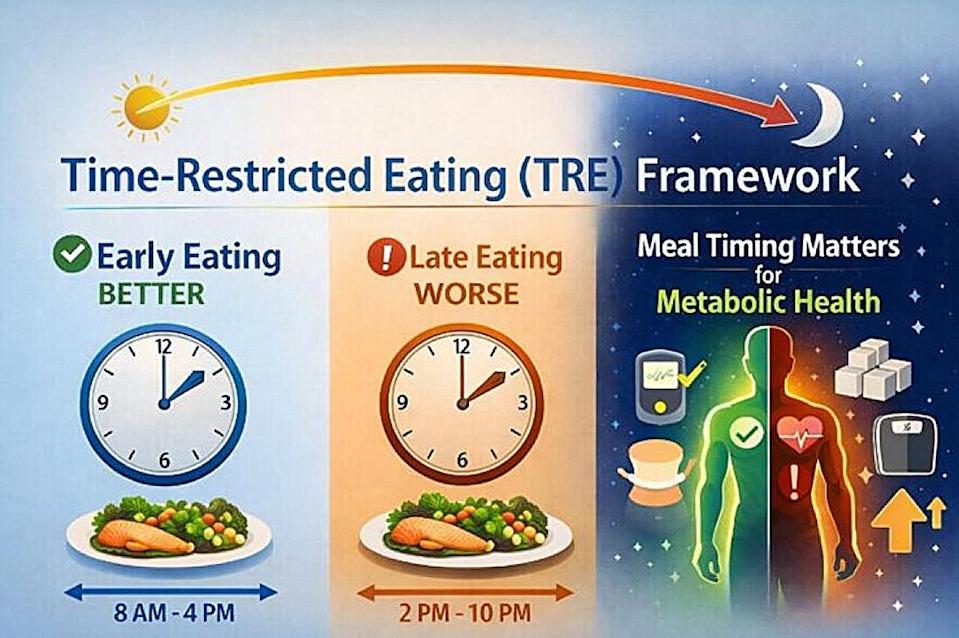
Time-restricted eating, by contrast, focuses specifically on aligning food intake with the body's circadian rhythm. TRE typically involves consuming all calories within a 6–10 hour window that is anchored to daylight hours — for example, eating between 8 AM and 4 PM or 10 AM and 6 PM. The key distinction is the emphasis on when you eat relative to your biological clock, not just the duration of the eating window.
The Circadian Dimension
Emerging research suggests that the timing of food intake relative to circadian rhythms may be as important as the duration of the fasting period. A landmark study from the Salk Institute found that mice fed within a time-restricted window aligned with their active phase had significantly better metabolic outcomes than mice eating the same calories spread throughout the day and night — even when total caloric intake was identical.
In humans, early time-restricted eating (eTRE) — where the eating window is front-loaded in the morning and early afternoon — has shown particular promise. A 2022 randomized controlled trial published in Cell Metabolism found that eTRE improved insulin sensitivity, blood pressure, and oxidative stress markers in men with metabolic syndrome, independent of weight loss. This suggests that the metabolic benefits of TRE go beyond simple caloric restriction.
Comparing the Benefits
Both IF and TRE can support weight management, primarily through reduced caloric intake and improved metabolic flexibility — the body's ability to switch between burning glucose and fat for fuel. However, their mechanisms diverge in important ways. IF protocols like 5:2 work largely through caloric restriction and the metabolic adaptations triggered by extended fasting periods, including increased ketone production and autophagy (cellular self-cleaning).
TRE, particularly when aligned with circadian biology, may offer additional benefits beyond caloric restriction, including improved gut microbiome diversity, enhanced sleep quality, and better cardiovascular risk markers. Some research suggests that circadian-aligned TRE can improve these markers even without significant weight loss.
Choosing the Right Approach
The best fasting protocol is the one you can sustain consistently. For most people, a 16:8 IF protocol or a 10-hour TRE window aligned with morning and afternoon hours represents a practical starting point. Always consult a healthcare provider before beginning any fasting protocol.
Written by
James Thornton, RD
Health & wellness expert contributing evidence-based content to Health Hub.